
2


No shocking NEW news, but an interesting story, particularly for here...Mark
The short-lived sportsbike that deserves a comeback
https://www.msn.com/en-us/autos/enth...af708b91&ei=37
Commercial success usually leads to mass production. After all, why bother making something that people want if you’re not going to maximize profits? Some of the most popular motorcycles in the world have only achieved that status because of the amount they sold, like the Honda Super Cub and its over 110 million units sold. But while bikes like the Super Cub have proved that there's big money to be made in mass production, there are some immensely popular bikes that never made it into four-digit production runs.
Low Run And High Sales Shouldn’t Happen
Companies exist to make money. Sure, they might have some altruistic mission statement about making the world a better place, or providing some sort of service, or helping people discover something, but at the end of the day, these things all take money. So when a company stumbles on a success, they run with it.
Take the Super Cub again. Since it first started production in 1958, Honda has made enough that every single person in Germany could have at least 1.3 of them. Then there’s the Hero Splendor. You’ve probably not heard of this bike, given it’s primarily in the Asian market, but over 30 million have sold. Even reasonably new bikes, like the BMW R GS Series, are closing in on half a million sales.
Of course, the number of bikes made does correlate to what style the bike is. Commuter bike? Probably going to be a lot of them. 125cc? Plentiful. Cruiser? Depends on the country but, for the US, sure. The most common type of bike to have a low run but still be popular? Arguably, that crown goes to the sportsbike.
Why Low-Production Sportbikes Almost Always Come From The Track
Now, there are plenty of high-selling sportsbikes. The Suzuki GSX-R series has sold over 1.2 million bikes, so not exactly a short run. But that’s not to say that every sportsbike with a great reputation gets produced enough for everyone and their grandma to have one. And that’s because of their more unique position in the motorcycle industry.
While manufacturers typically make sportsbikes because they want to, there are some that are made begrudgingly. Ones that manufacturers don’t even want to make, but have to — especially within the big four Japanese marques. These are your homologation specials. Bikes that only exist because the racing series bigwigs said they had to in order to compete.
These are the bikes that are so cutting-edge, so advanced, that no normal person wants to spend the money to buy one, and manufacturers don’t really want to spend the money to make them road-legal. A compromise is met where the manufacturer will make as few as possible, hitting the threshold that lets them compete. It led to bikes like the Honda RC30, of which 3,000 were made, and the 1985 Suzuki GSX-R750RK which only had 500. These are bikes that the public loves but that are, at best, a break-even for the company making them due to the limited runs. And when it comes to low-run homologation specials that deserve more, there’s one in particular that should come back.
The Yamaha YZF-R7 OW-02 Is The Holy Grail For Some
The World Superbike Championship has done a lot for motorcycling. How many amazing bikes wouldn't exist were it not for the series, given that it requires manufacturers to make road-going variants of the bikes they'll compete with? The GSX-R750RK and the RC30 are two off the bat. But as good as those were, there’s another bike born of the series that people clamor for even more. And that’s the Yamaha R7 OW-02.
Now, there’s an important distinction here that the R7 and the R7 OW-02 aren’t the same bike. The modern R7 is a 689cc sportsbike with 72 horsepower and 50 pound-feet of torque. Fine, but nothing on the R7 OW-02.
The R7 OW-02 was created to allow Yamaha to compete in the 1999 and 2000 WSBK championships. The race bike would take one win in 1999 and was actually in contention for the 2000 title until the final round, but factory rider Noriyuki Haga was banned from the event for failing a drugs test earlier in the year, handing the title to Colin Edwards and the Honda SP1.
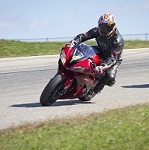
Unlike some other homologation bikes, the road-going R7 (the OW-02) wasn't actually much different from its racing counterpart. Both had a 749cc inline-four engine with titanium valves and connecting rods, both used the same chassis derived from the YZR500 Grand Prix Motorcycle Racing (now MotoGP) bike, both used Öhlins suspension, and both were incredibly aggressive-looking race bikes, though the OW-02 had the lights necessary for legality. There was no passenger seat on either, and the bike was, for the most part, incredibly similar. This, as it turns out, would be a blessing and a curse.
A homologation bike’s closeness to the race bike is usually one of its greatest strengths, and is why people go for that version over the more tame, but still sporty, bike that comes out later. That said, the R7 OW-02 was arguably too close to the race version, to the detriment of the ride.
To begin with, the OW-02 still had some of the same parts as the race bike—secondary fuel injectors being one example—but they were disabled. The footpegs weren’t moved, making it an uncomfortable ride pretty much anywhere on the road. Its rigidity was a pro on the track, but a con everywhere the road isn’t pool table smooth. And then the power. While it was very close in terms of hardware, it had been detuned to make it conform to Germany’s maximum power restriction. You could unlock all of these things if you wanted to, making it a race-ready bike, but you'd have to pay for the upgrade package.
The R7 OW-02 was a bike that Yamaha made out of necessity rather than out of choice, and they clearly spared some expense in making it road legal. But does that mean that it, and the 500 units they made, deserve to be consigned to the history books?
The OW-02’s Legacy Deserves More Bikes
While the R7 name continues to this day, the OW-02’s does not. Yamaha stopped production as soon as they hit the number required by WSBK, having done all they were required to do and nothing more. Reviewers of the time noted its cramped riding position, its difficult riding around town, and the fact that it needed extra investment to get more power, along with its value compared to competitors. But while these were all going against it, there was a positive; it was a race bike for the road.
The modern R7 isn’t what the OW-02 was. It’s sanitized and accessible compared to the OW-02, which was very nearly a champion in 2000. It didn’t compromise, or cut corners, or cheapen itself to be more consumer-friendly. It was basically Yamaha saying, “We had to make this bike, so we’re making as few changes as possible and as few bikes as possible so we can get on with racing." In a world where everything is tested against multiple markets and homogenized, there’s always going to be a place for something that takes no prisoners in its approach.
The Market Wants More
Being that there were only 500 made, and the bike has risen to almost cult-like status, prices are high. Recent auction records show you’re looking at around $50,000 if you can even find one for sale but, with seemingly one sold in the last three years, you might have to wait.
It’s very unlikely that the OW-02 will ever make a comeback. While the market is obviously still very invested in the bike, Yamaha has moved on. Perhaps the world has, too, bikes like the OW-02 finding such market success now because nothing like it exists anymore. But it proves a point — people want to ride what they watch on TV. And the OW-02 is as close as you can possibly get.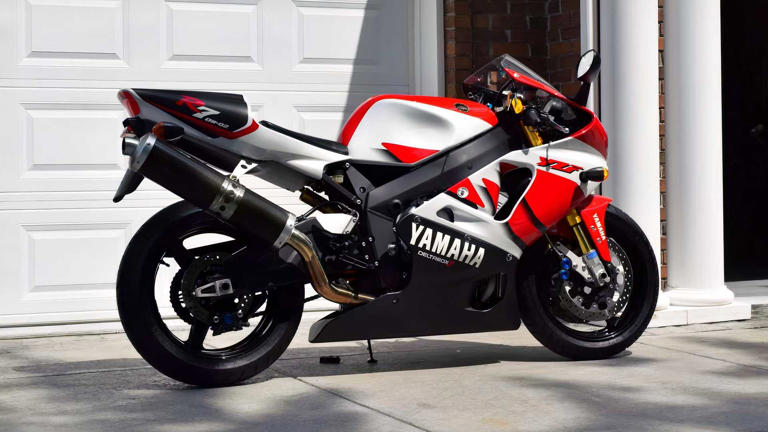

Hey, I know someone with one of those

I know someone that's had TWO of those!Originally Posted by xrocket21

Did you grit your teeth and try to look like Clint Fuckin' Eastwood?
Or did you lisp it all hangfisted like a fuckin' flower?
I still remember the day I saw R7's original on a group ride.
It was like the scene in The Godfather where Michael is struck by the thunderbolt.

Yes, and thank you for those calipers. They sure are a nice upgrade.

Yamaha
 Posting Permissions

 Reply With Quote
